FROM CLAY.
TO COLOUR.
In my hands at every stage—from the first soft clay and my own glaze recipes to the kiln, the smoke and the final clean. Follow the journey of the pottery I make, one piece at a time.
A little clay.
A world of possibility.
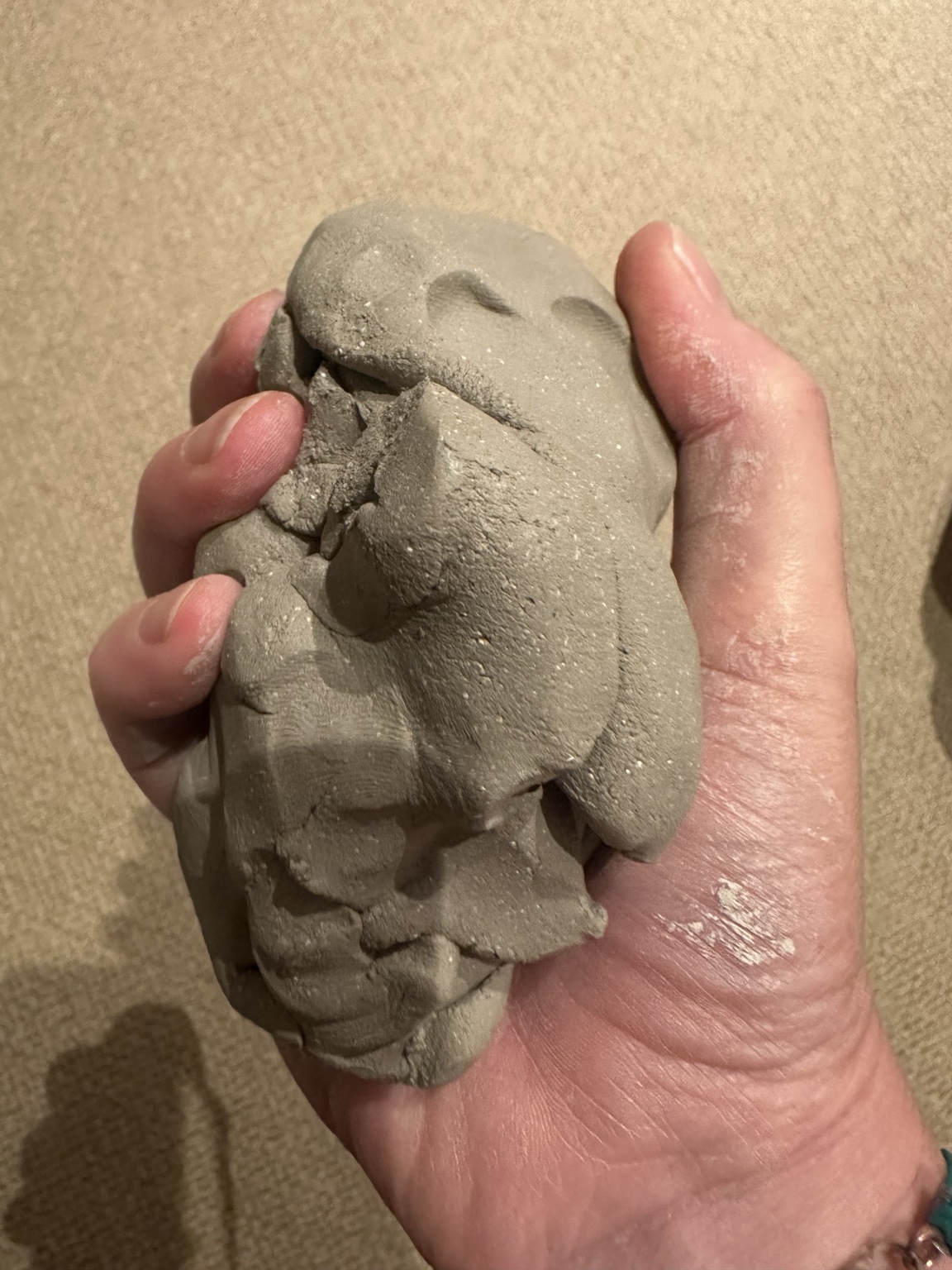
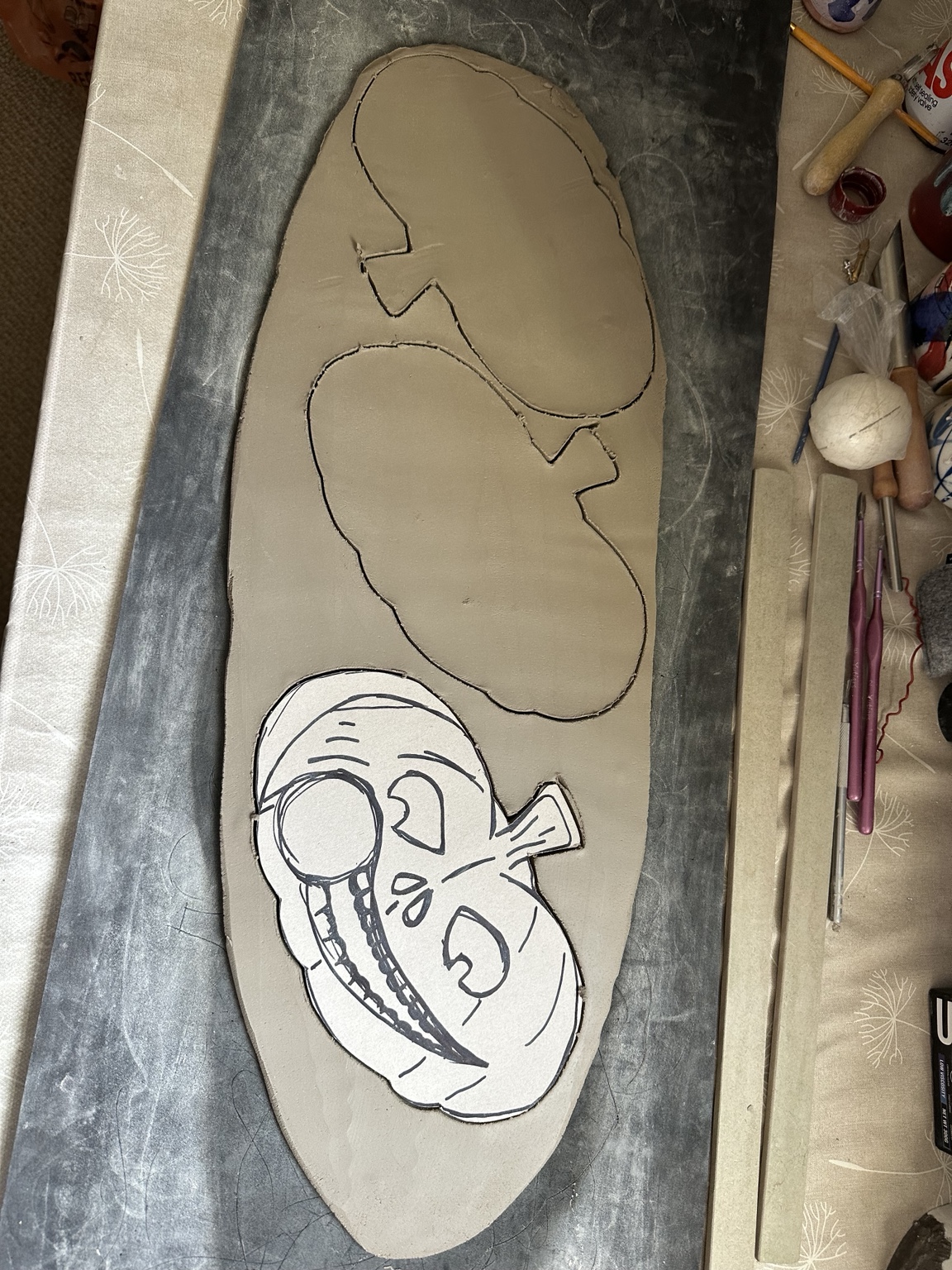
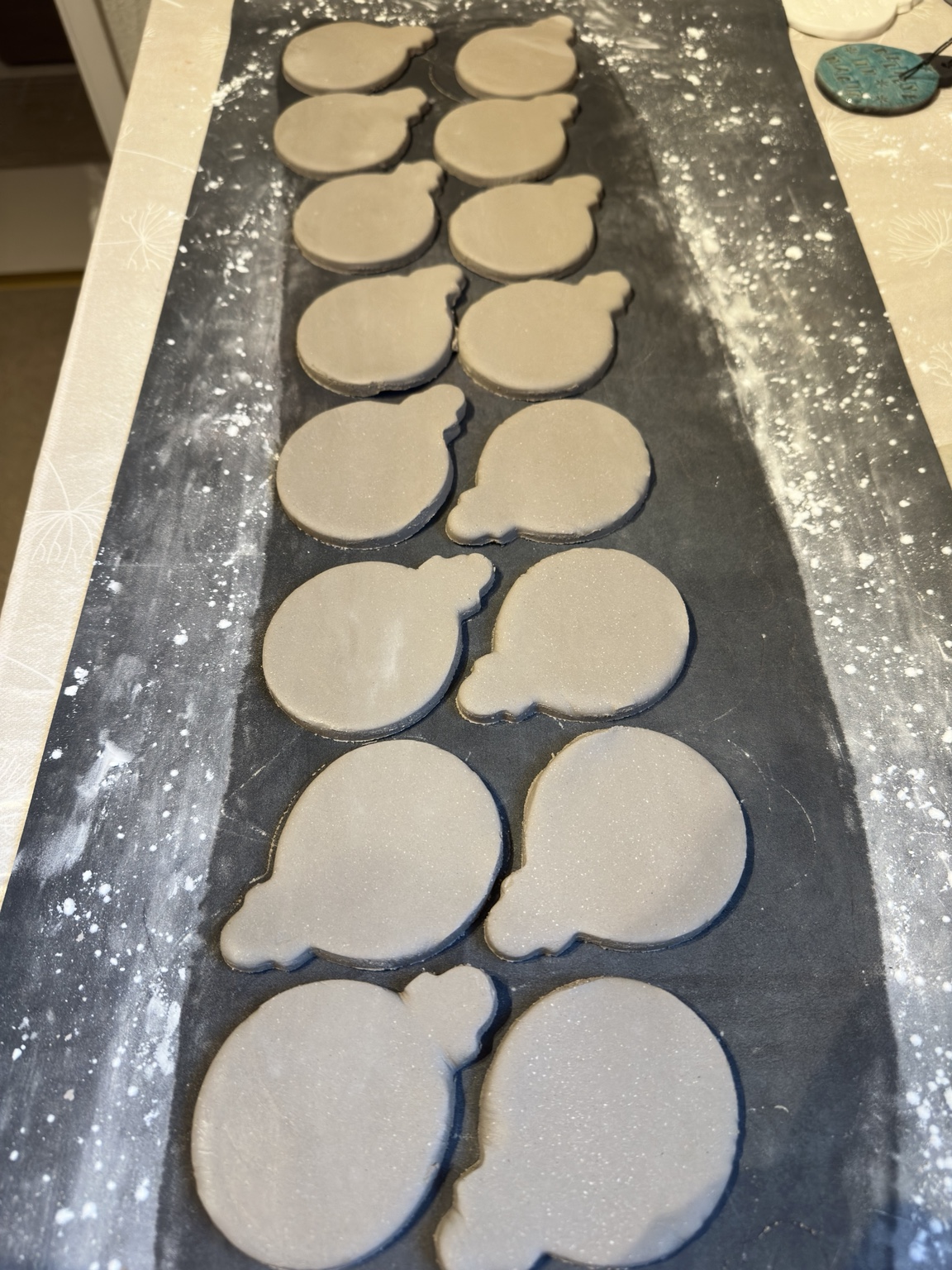
Before the copper flashes and crackled colours, there is simply clay. I roll, cut and shape it by hand, turning a soft lump into hearts, leaves, decorations and little characters.
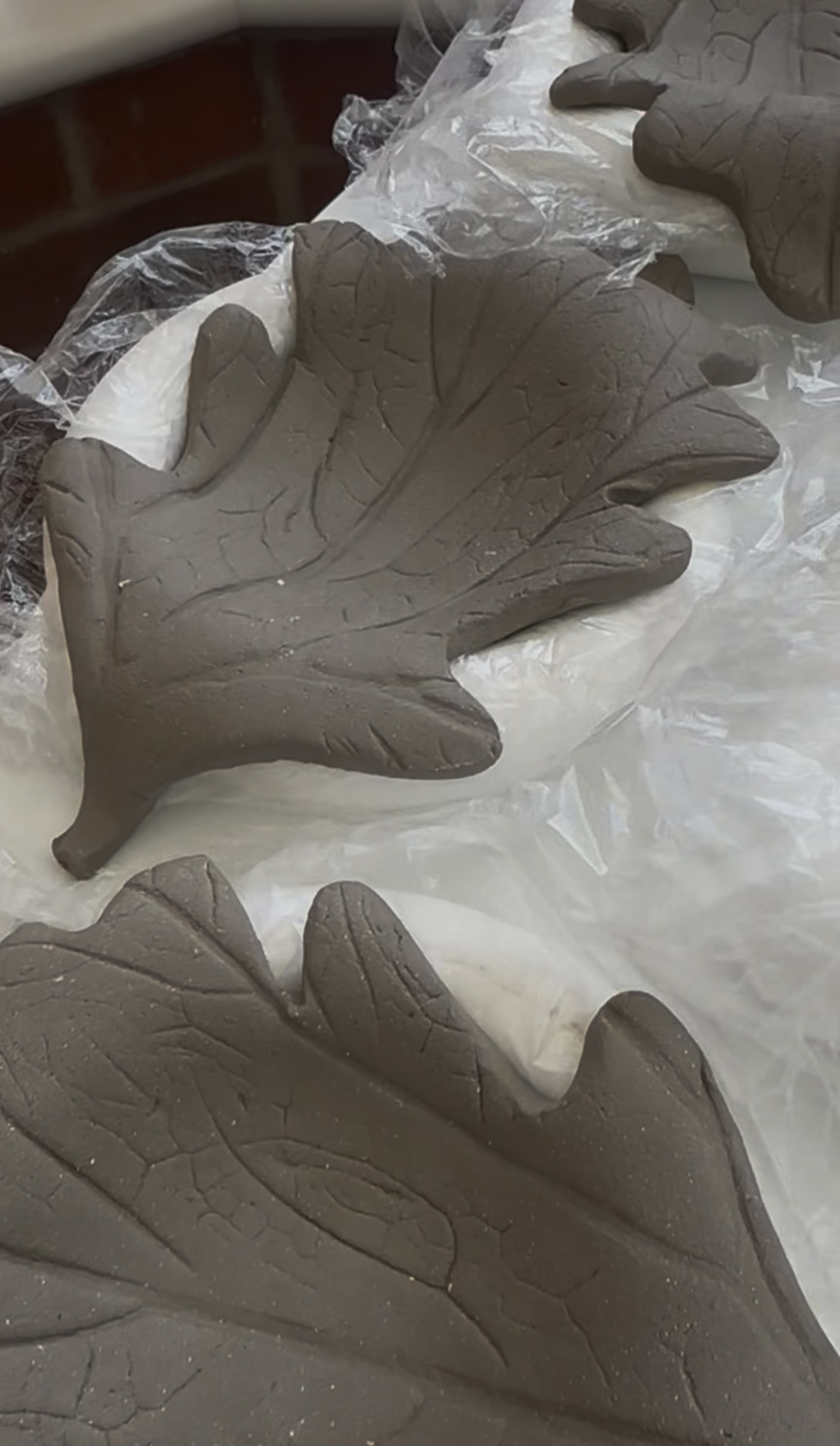
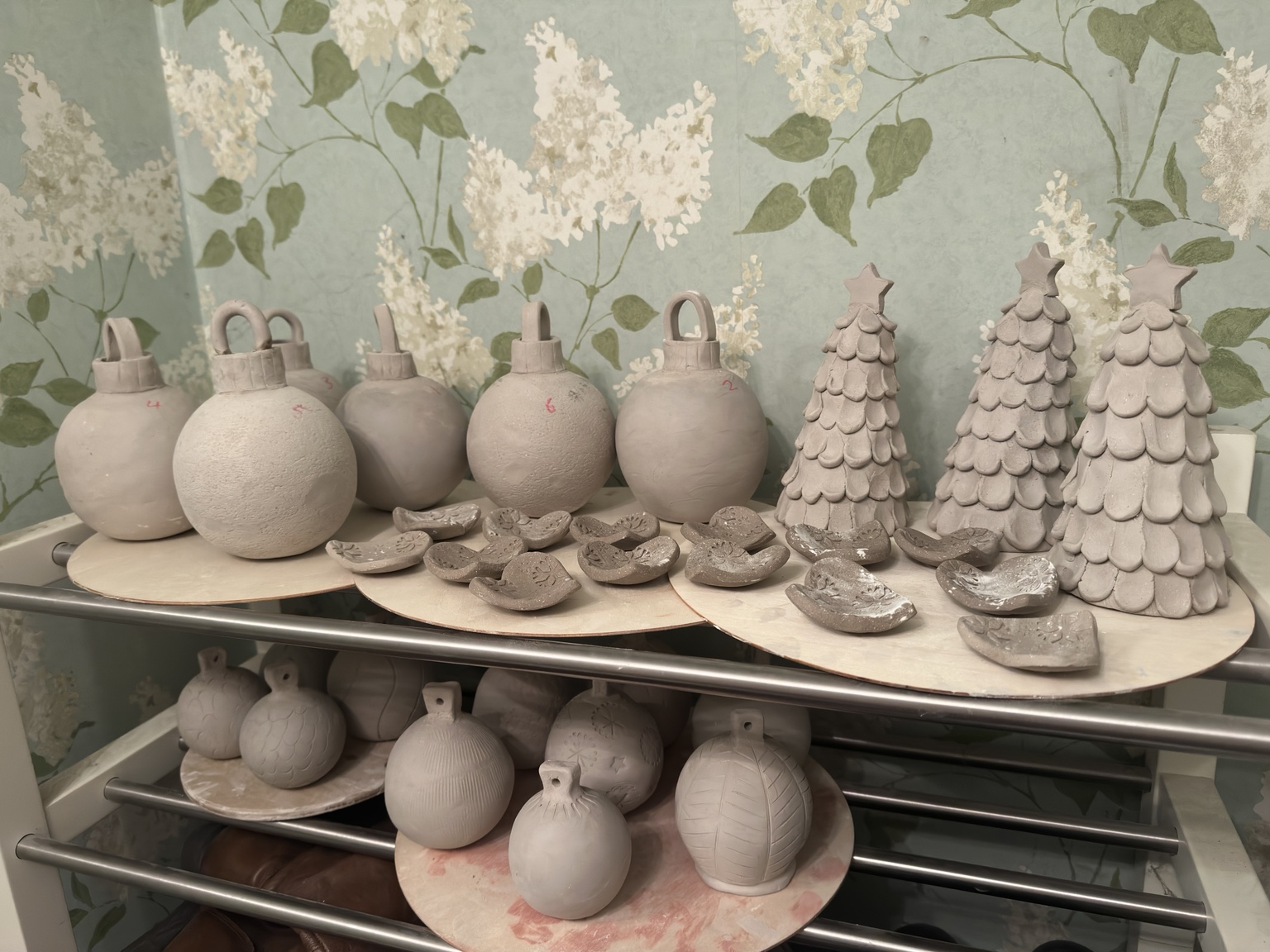
Patterns are pressed into the surface while the clay is still soft. Edges are smoothed and shapes gently curved, giving each piece its own character long before it reaches the fire.
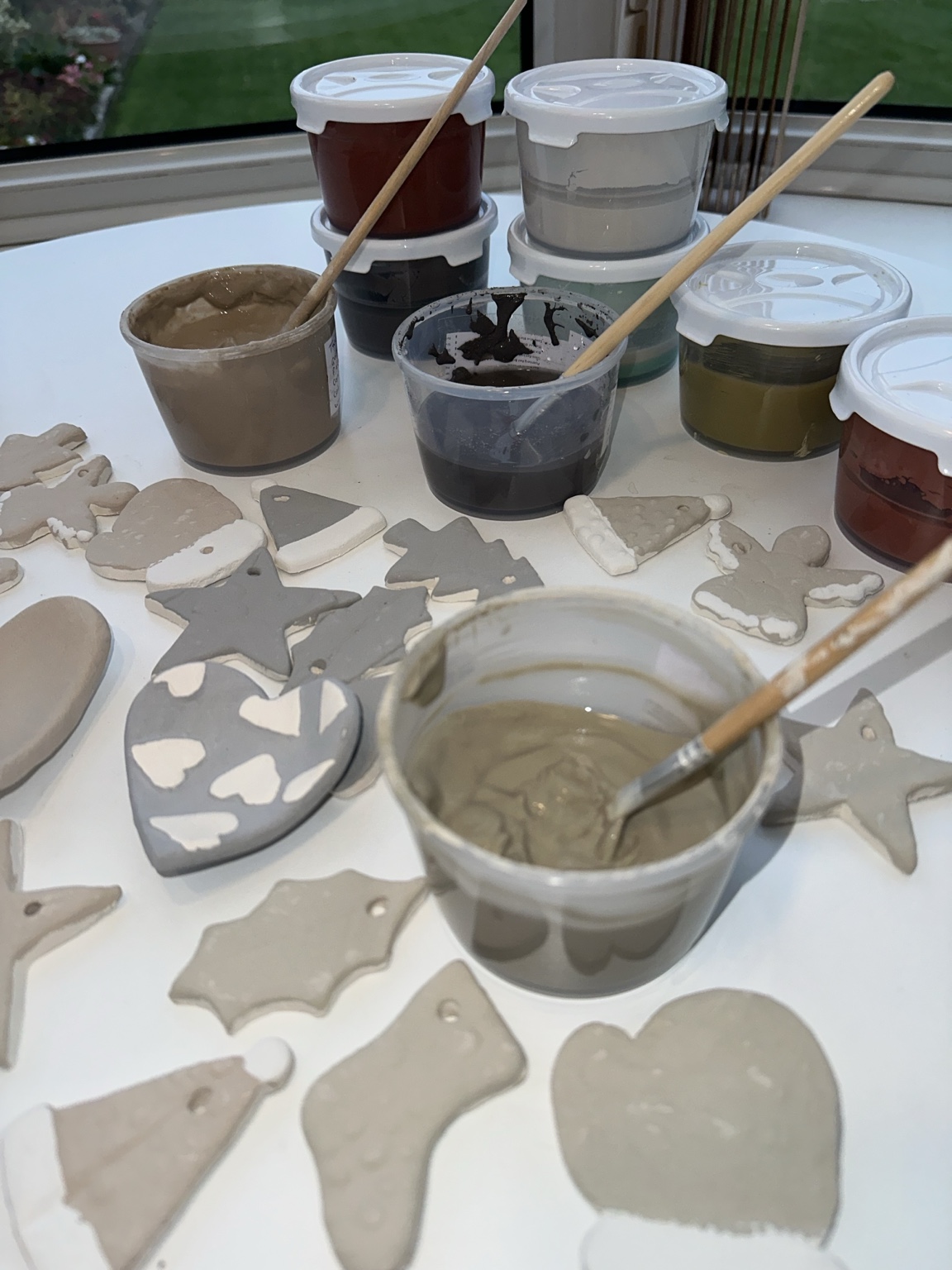
Before each piece dries, I check its shape, edges and pressed details by hand. Then comes a quieter part: drying. Each piece needs to dry thoroughly before its first firing. The photographs below show different pieces at this early stage.
Ready for
the next chapter.
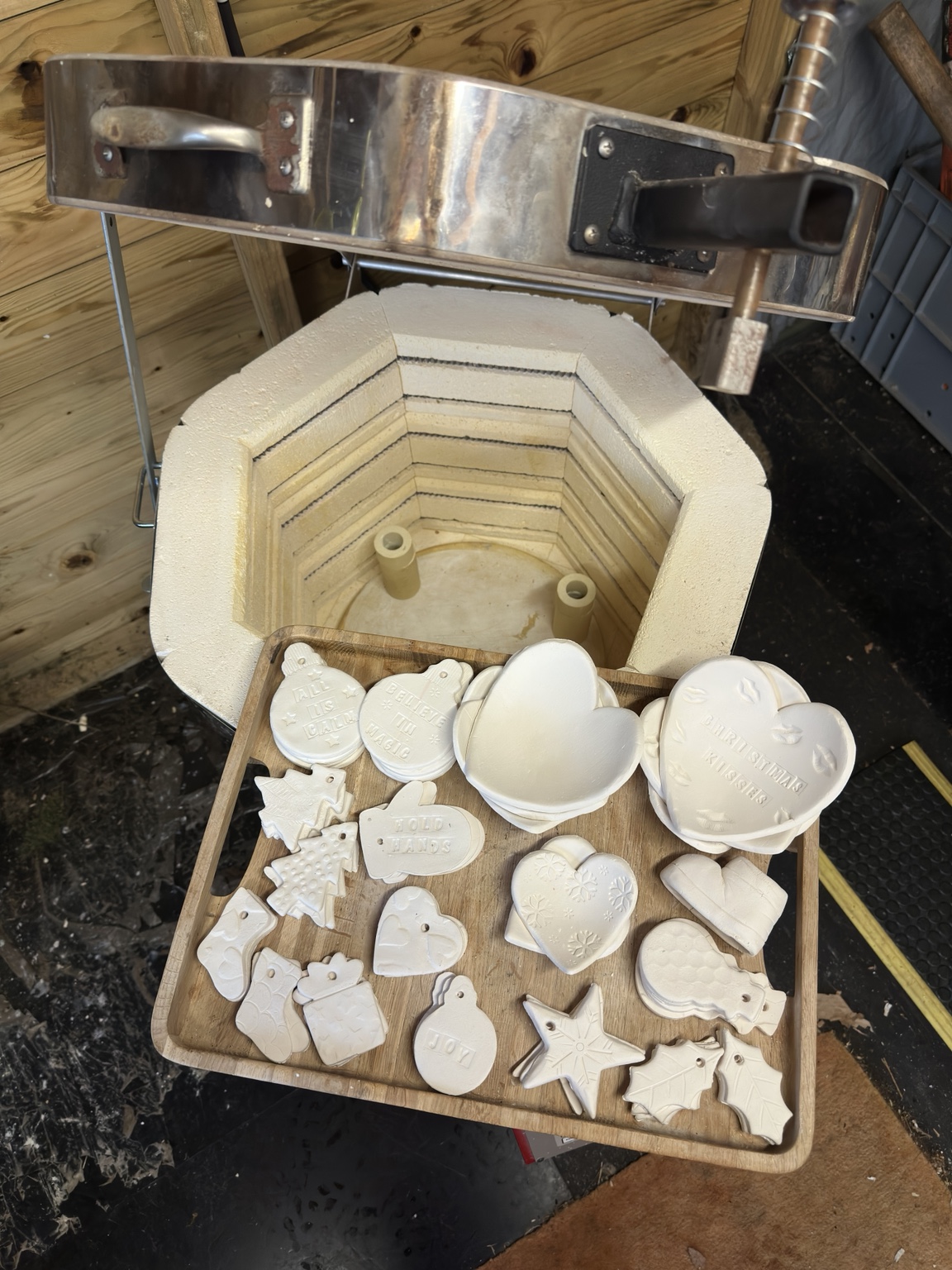
Once fully dry, the pieces have their first kiln firing, called a bisque firing. This changes fragile dried clay into ceramic, while leaving it porous enough to take up glaze.
The kiln cools before I unload it by hand and check each piece. The shapes and pressed details are still there, but the clay is now ready for colour.
My own glazes.
A little alchemy.
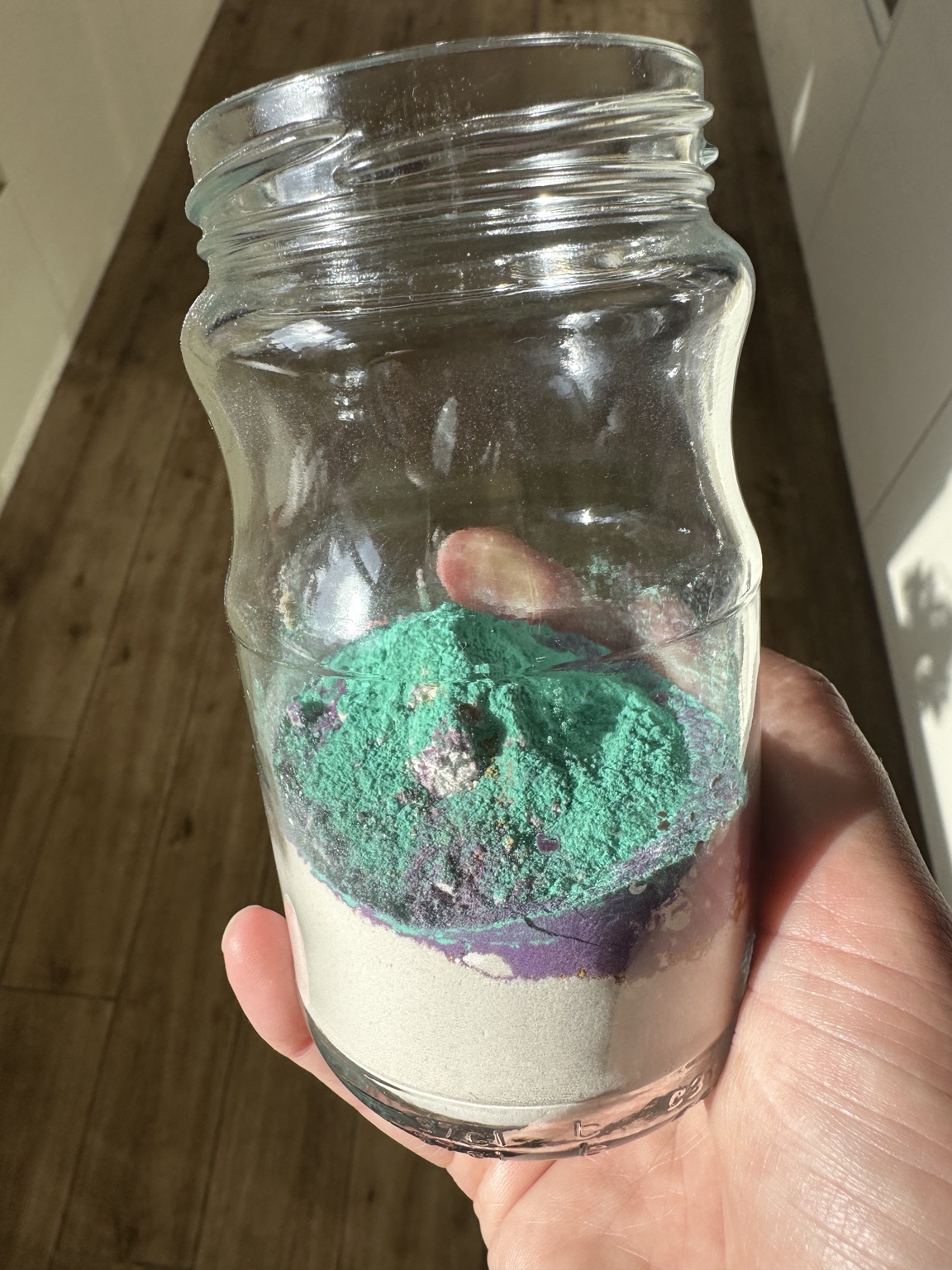
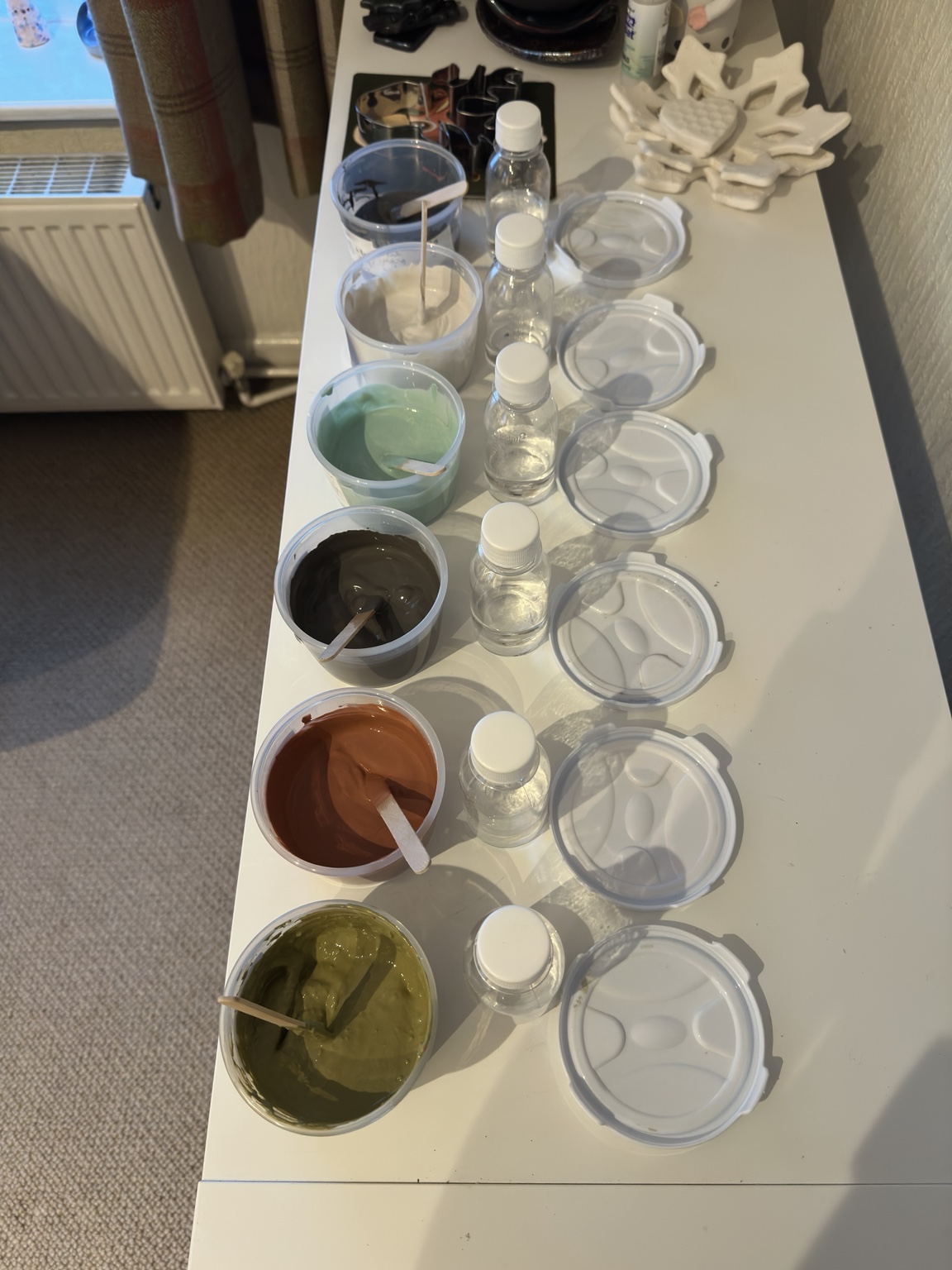
The making does not stop at the clay. I develop and mix my own Raku glazes here at The Clay Snug, weighing raw ingredients, making small test batches and learning from each firing.
Each recipe is a starting point for colour, crackle and metallic flashes. I test, adjust and fire again, gradually building a palette that feels like my work.
Once mixed, I brush the glaze onto the bisque-fired pottery by hand, working over its curves and into its details. The colours in the tubs are not a preview of the finished piece: heat and reduction will transform them.
I can develop the recipe and choose how to use it, but the fire and smoke still bring their own surprises. That balance of careful testing and unpredictability is part of what I love about Raku.
Fire gets the final say.
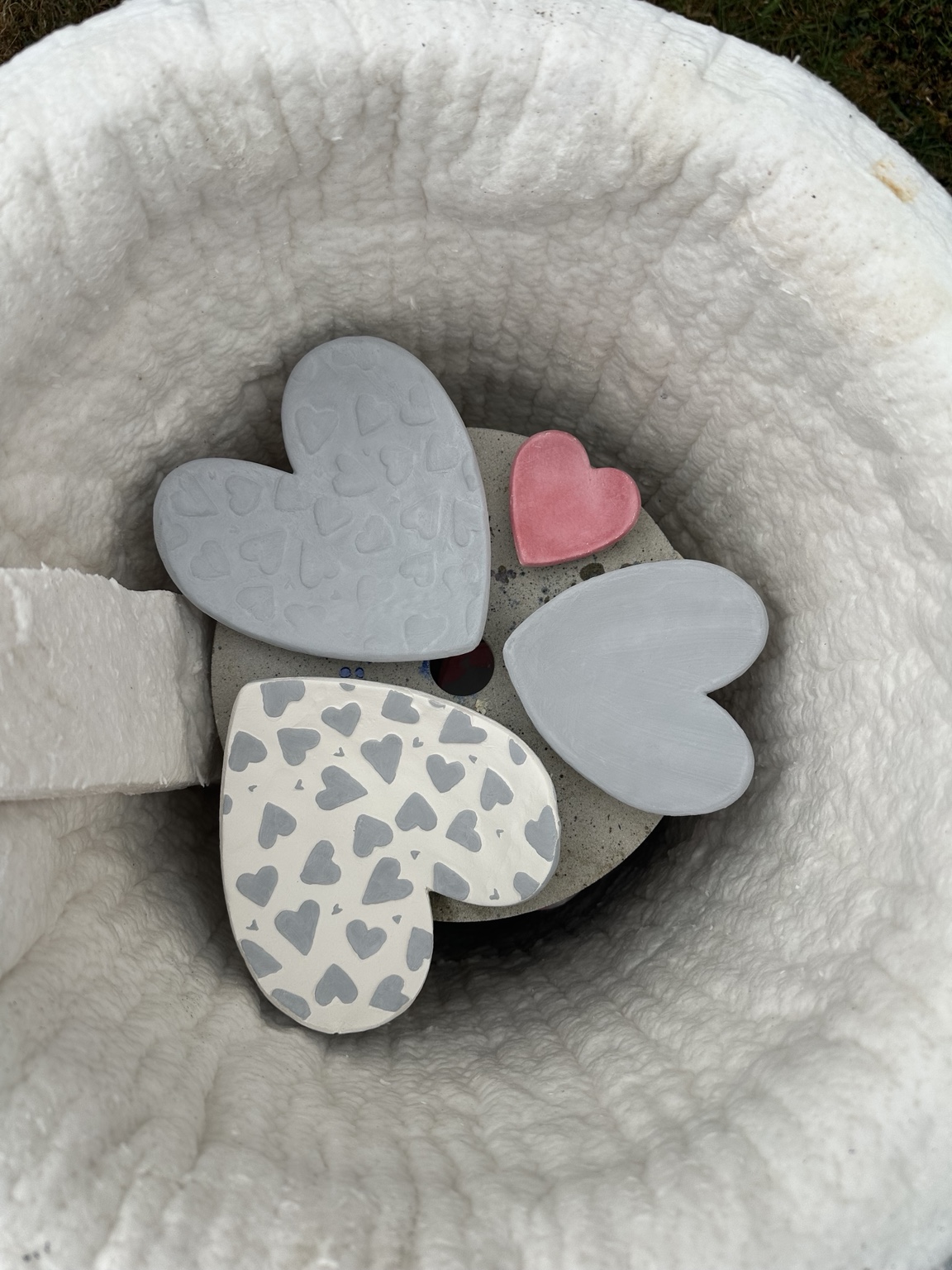
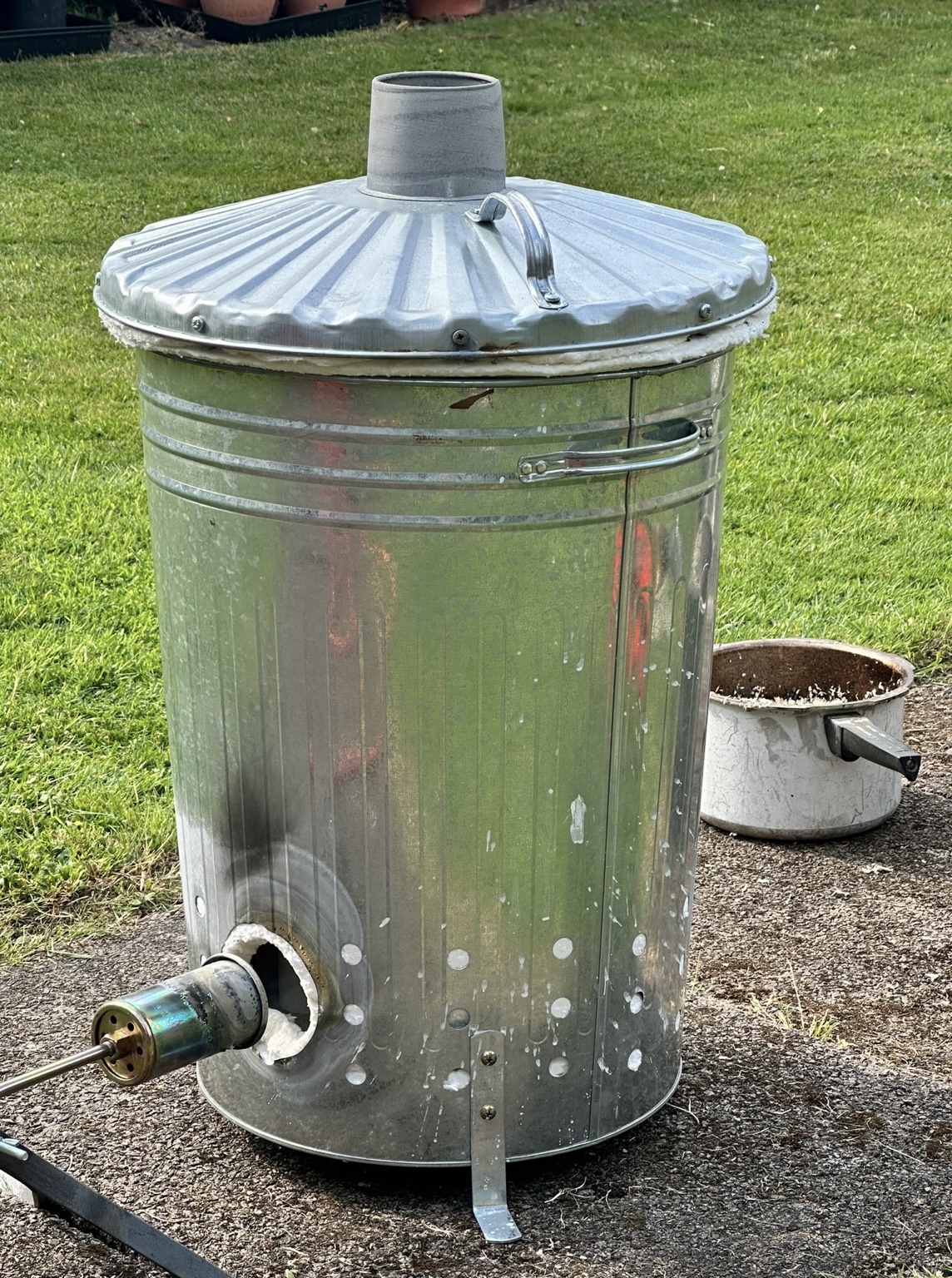
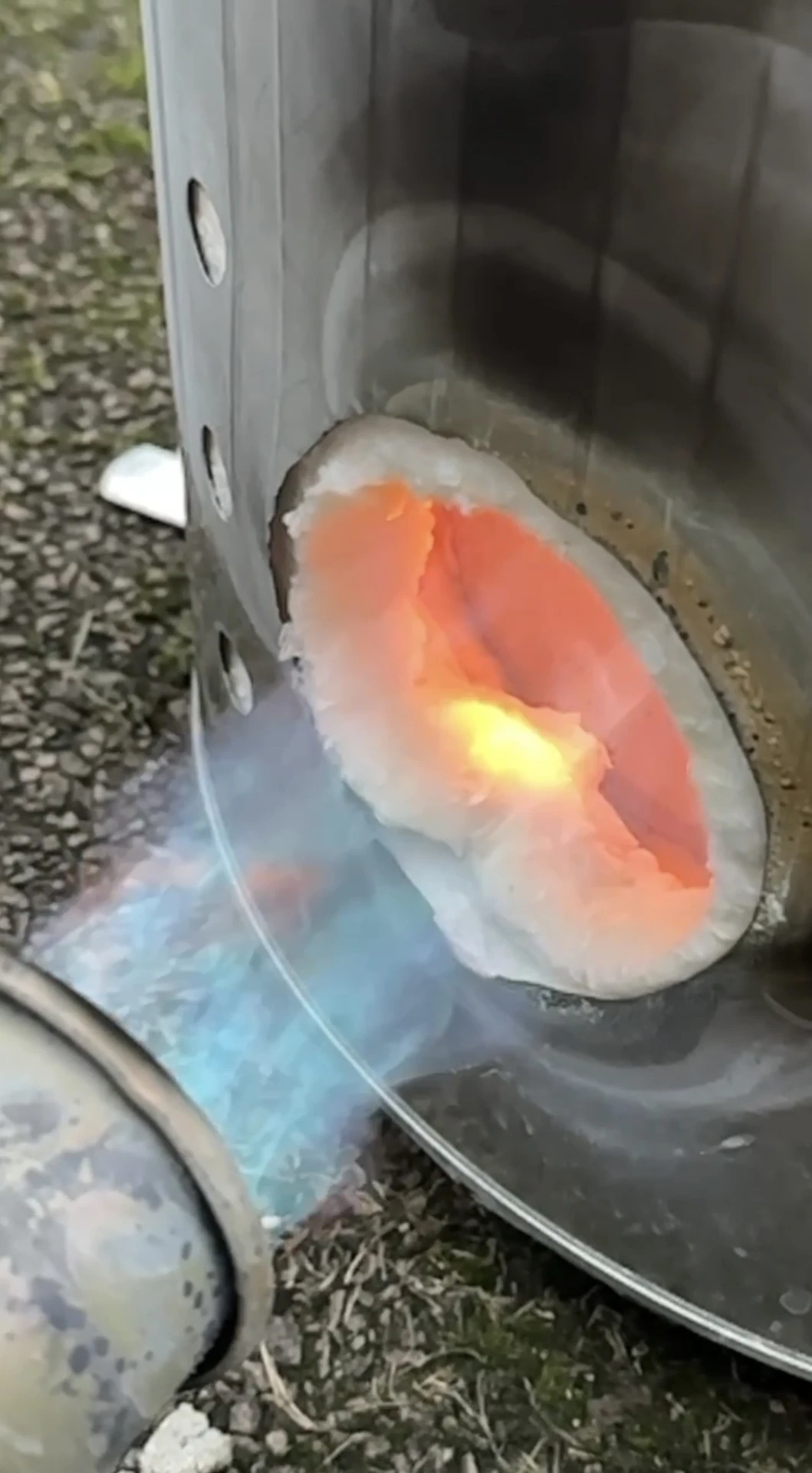
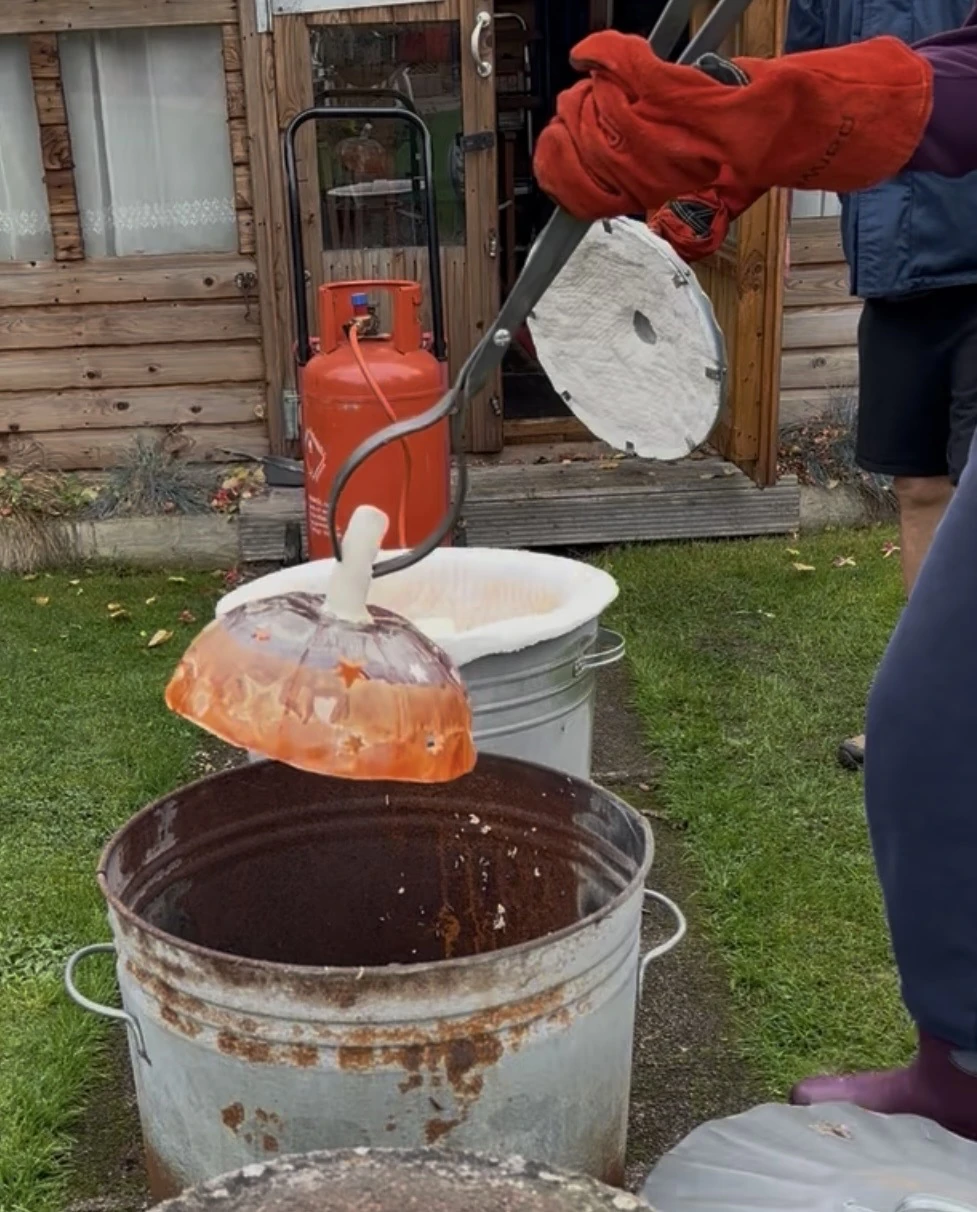
The glazed pieces go into the Raku kiln and are heated until the glaze has melted. While the pottery is still glowing hot, I lift each piece out myself with long tongs. Even here, every piece is handled individually.
This is where the pace changes: quiet preparation becomes a carefully timed journey from kiln to reduction container. The photographs show the kiln, the glowing pottery and those first moments outside the fire.
Smoke leaves
its signature.
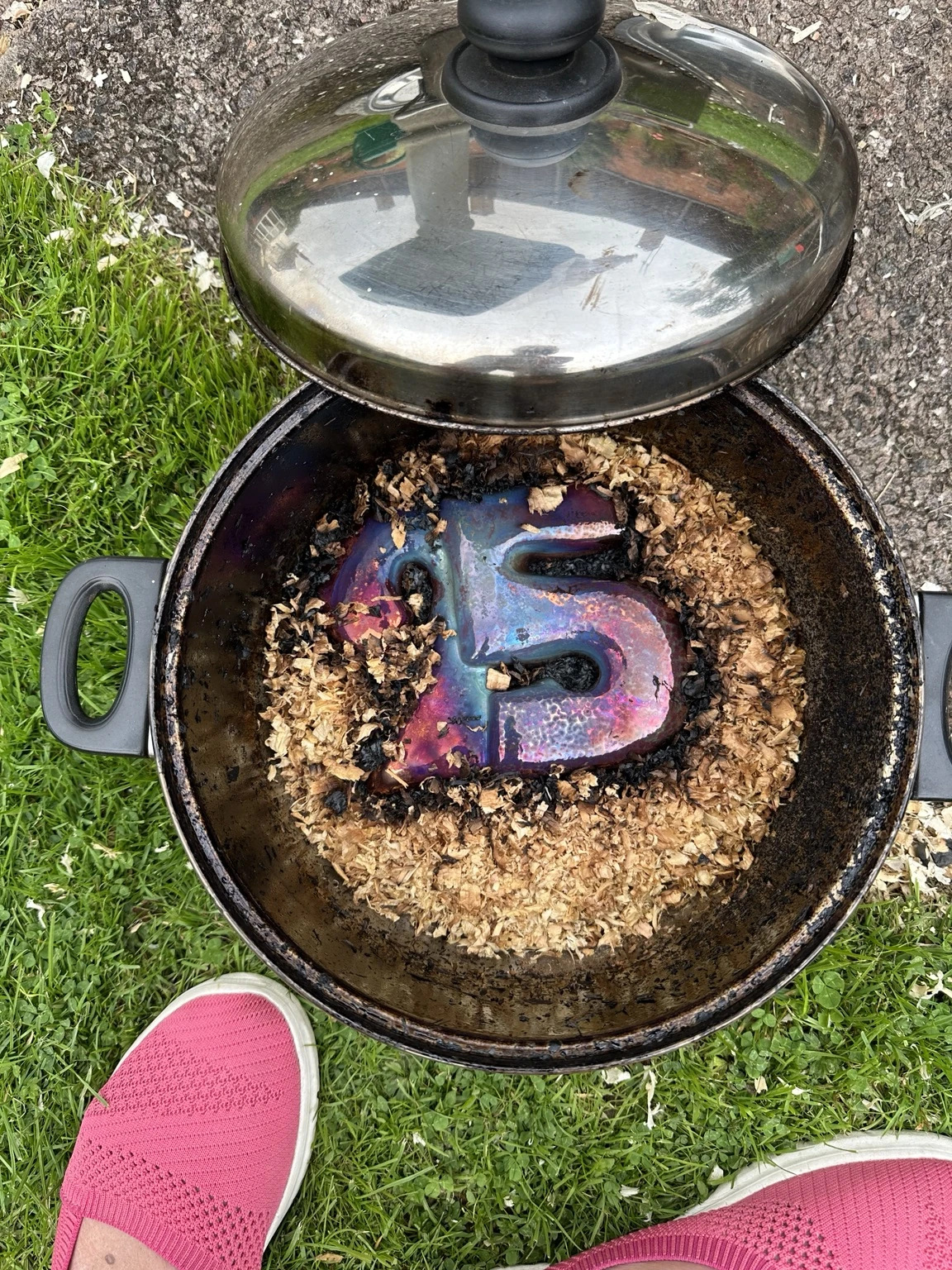
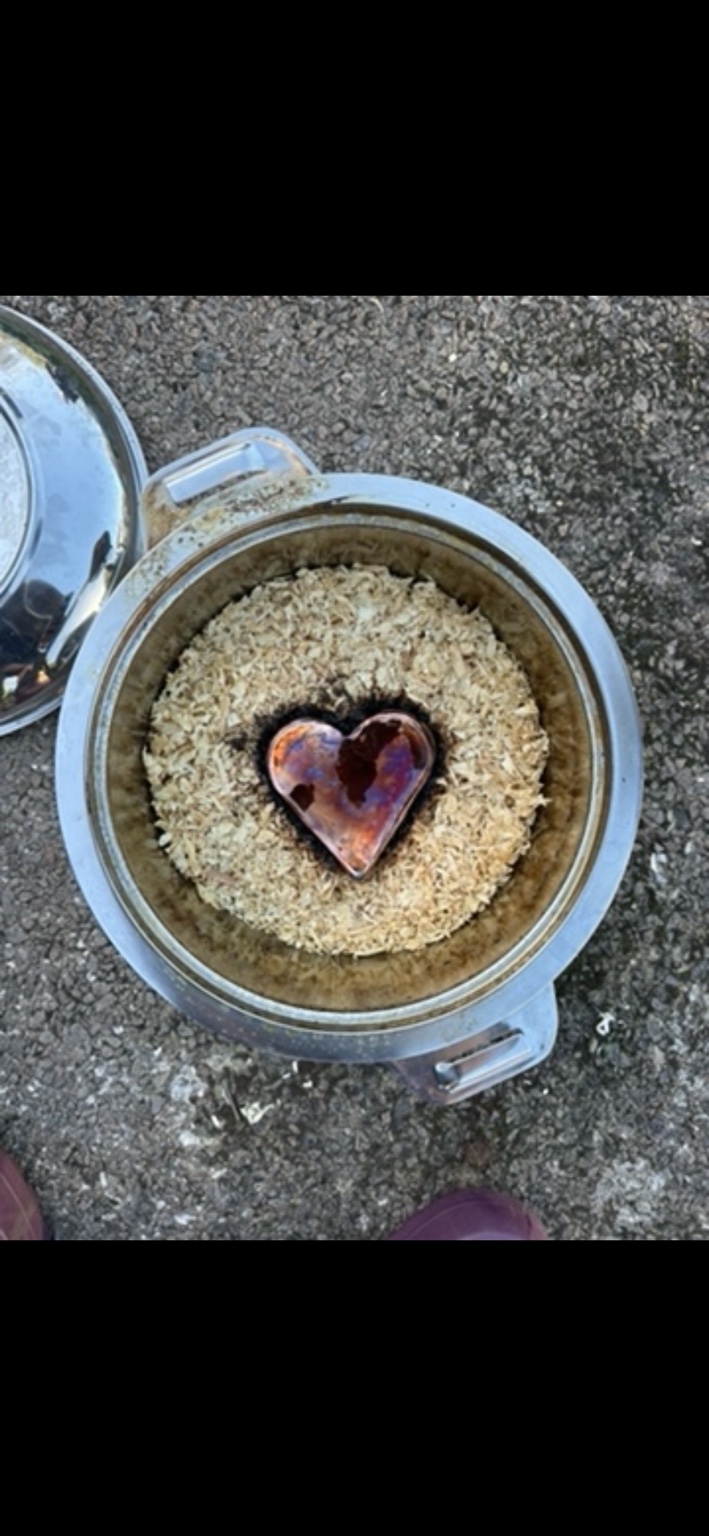
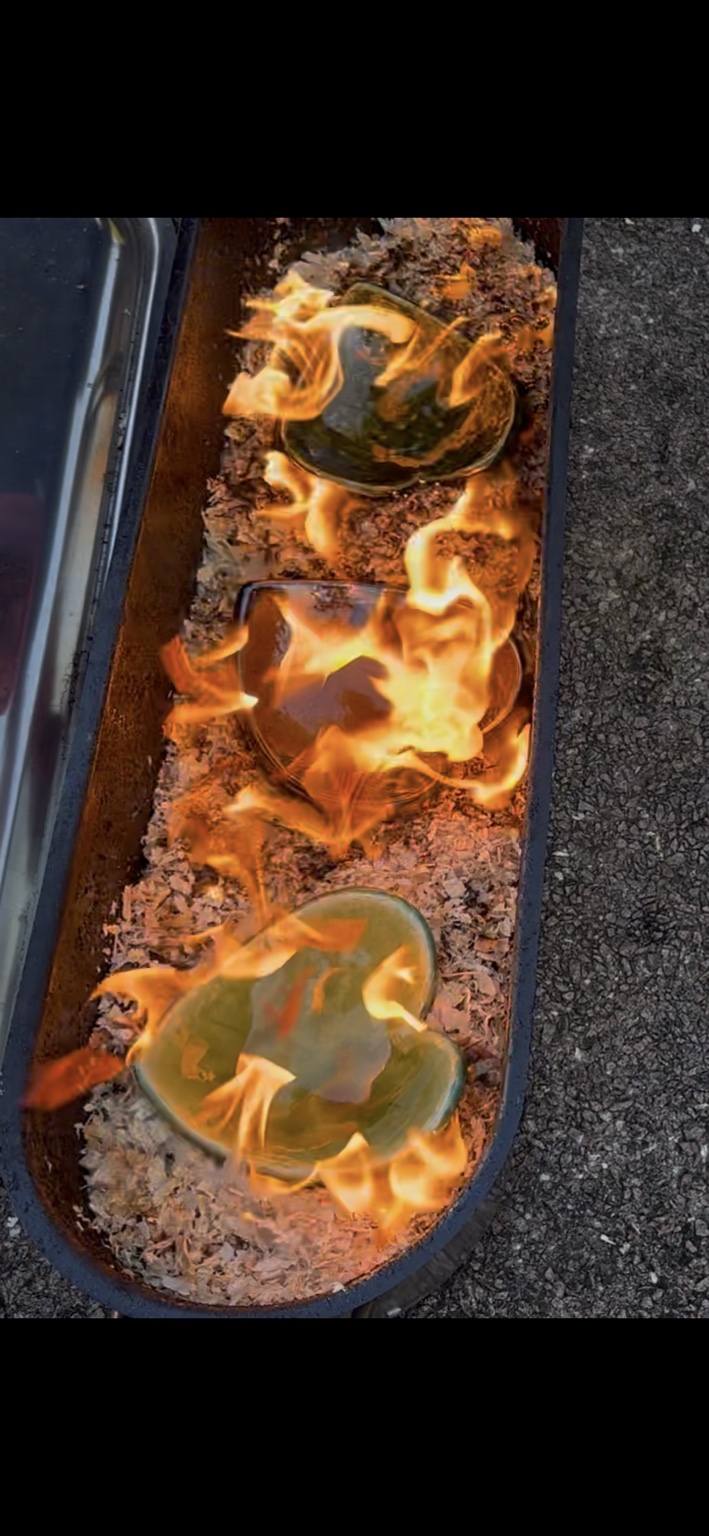
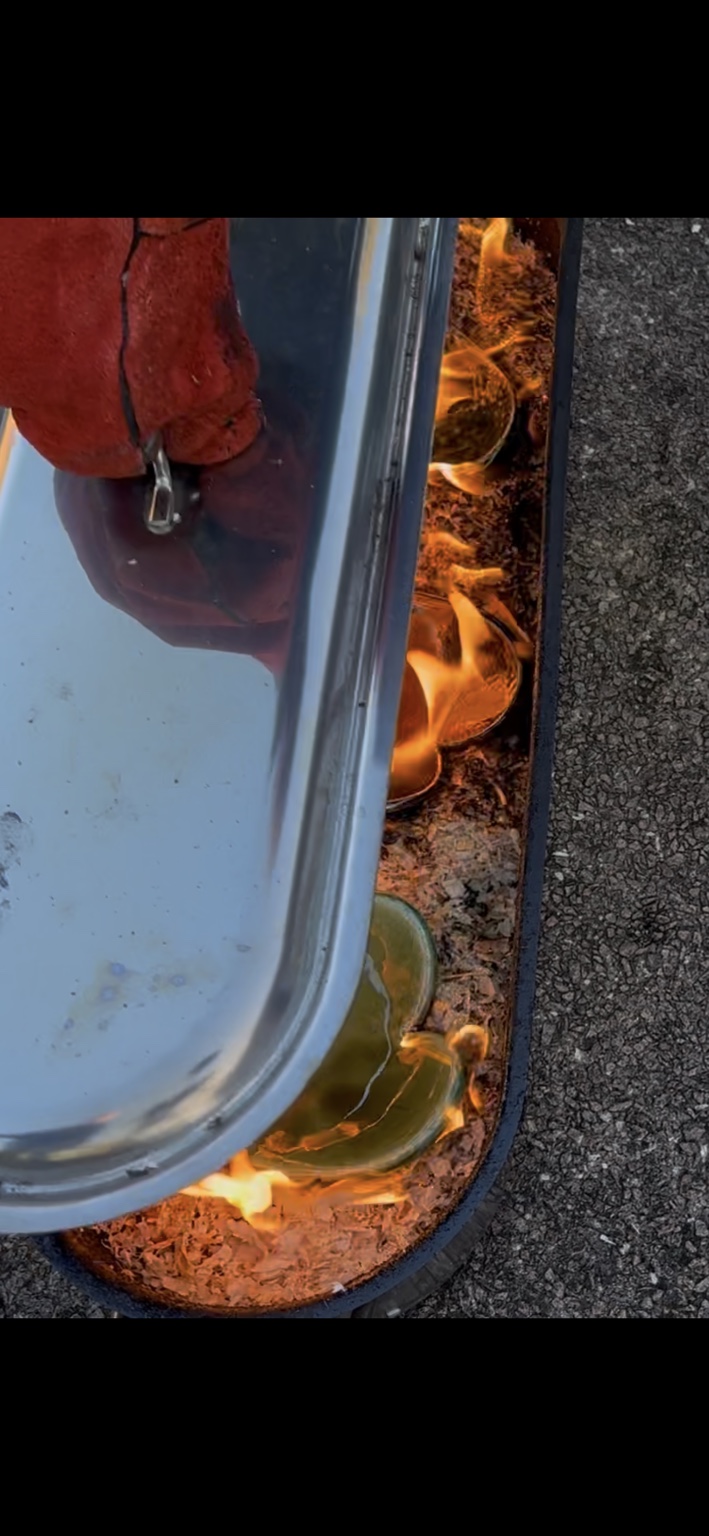
The hot pottery meets combustible material in a reduction container. It ignites, and I close the lid to limit the oxygen around the piece. This smoky atmosphere changes how some glaze ingredients behave, helping create metallic flashes and shifting colours.
Smoke also leaves carbon in unglazed clay and in cracks in the glaze. Those black backs and fine dark lines are part of the firing story, alongside the copper, blue and soft smoky tones.
Always a
little surprise.
Once the pottery has cooled, it is back in my hands. I clean away loose soot and residue by hand to reveal the surface beneath. Colours catch the light, crackle becomes clearer and the marks of fire and smoke emerge.
I can choose the clay, shape, texture and glaze, but I cannot make the firing repeat itself exactly. That is why every finished piece is its own small discovery.
Raku pottery is decorative rather than food safe. Its porous body and distinctive surface need gentle care.
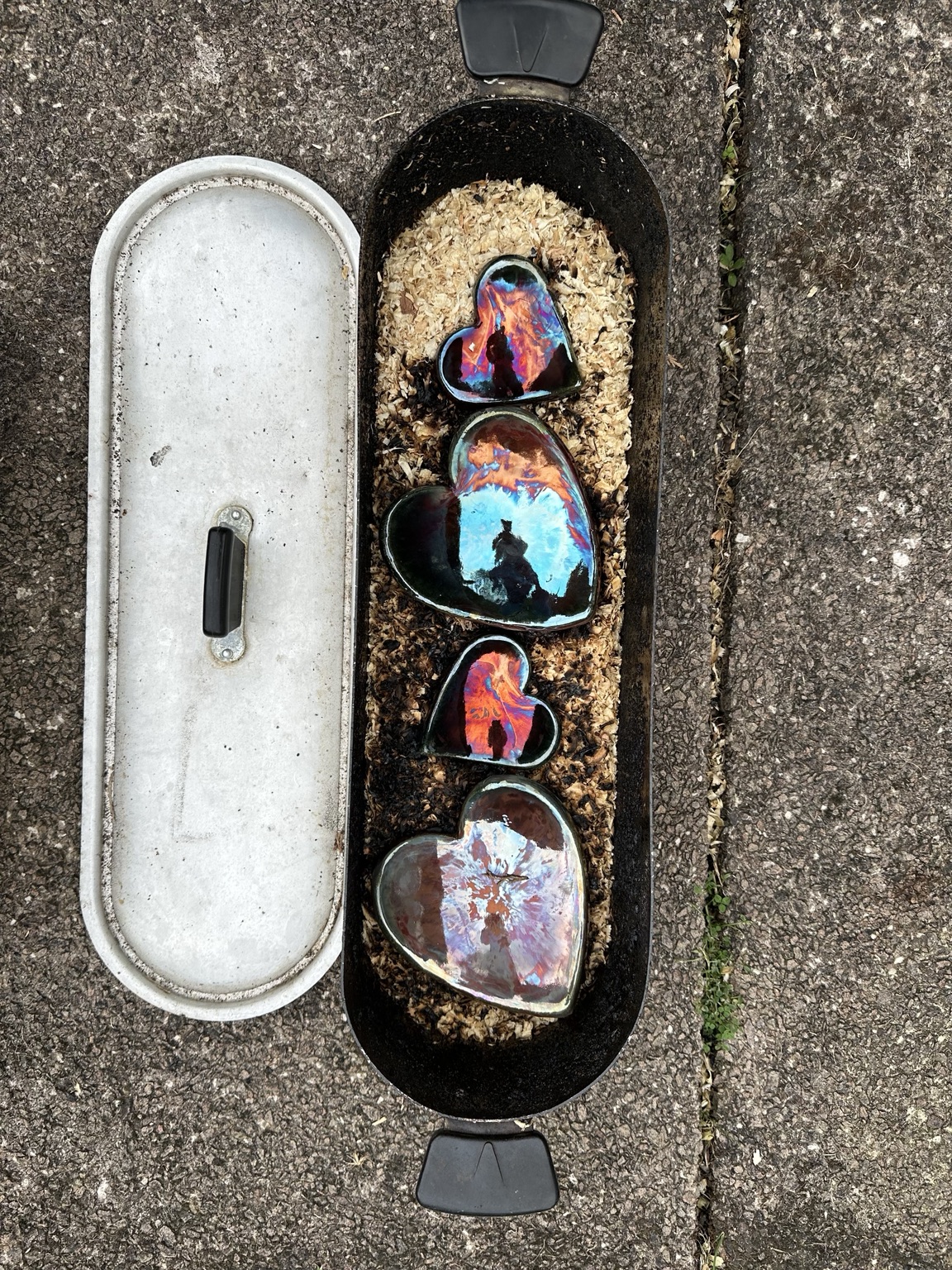
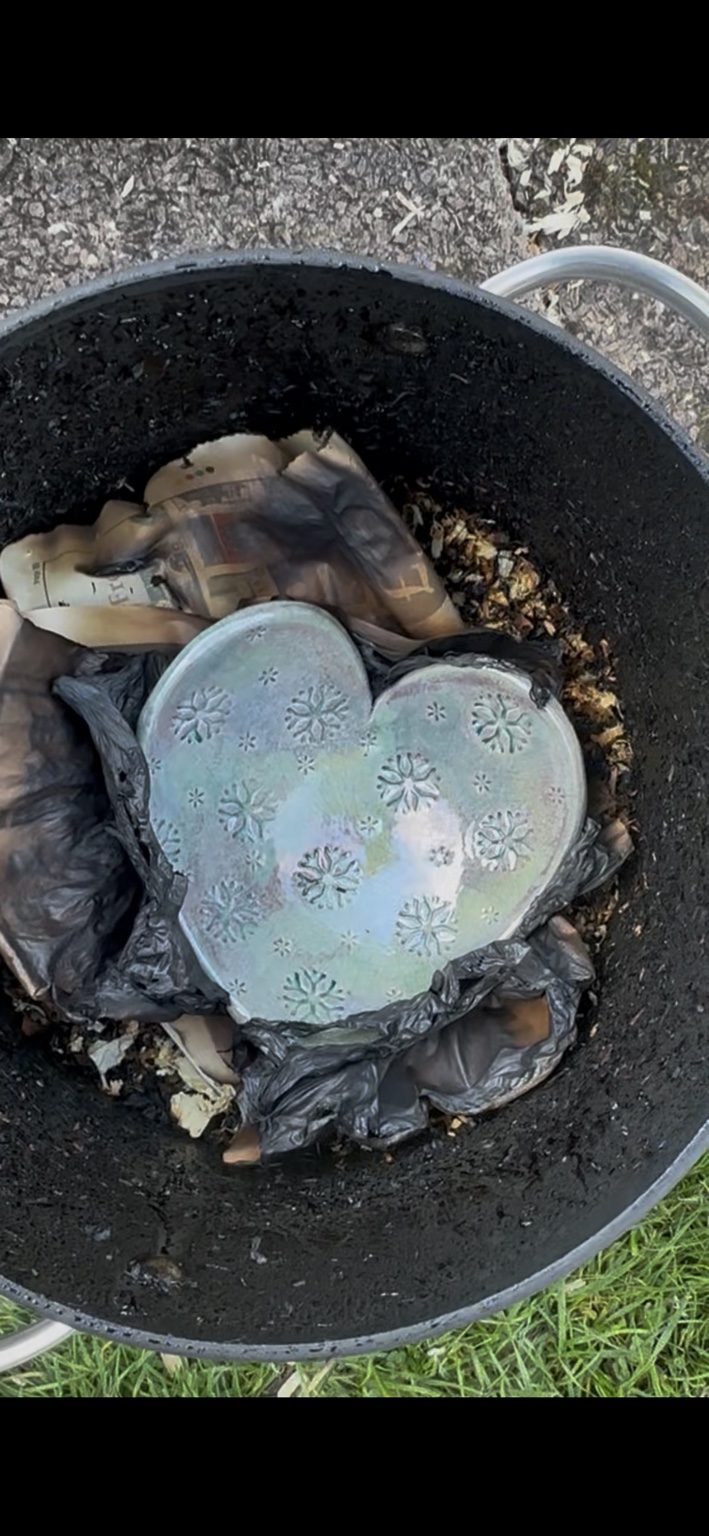
The photographs on this page follow the stages of my process across several different pieces and firings.
From my hands.
To yours.
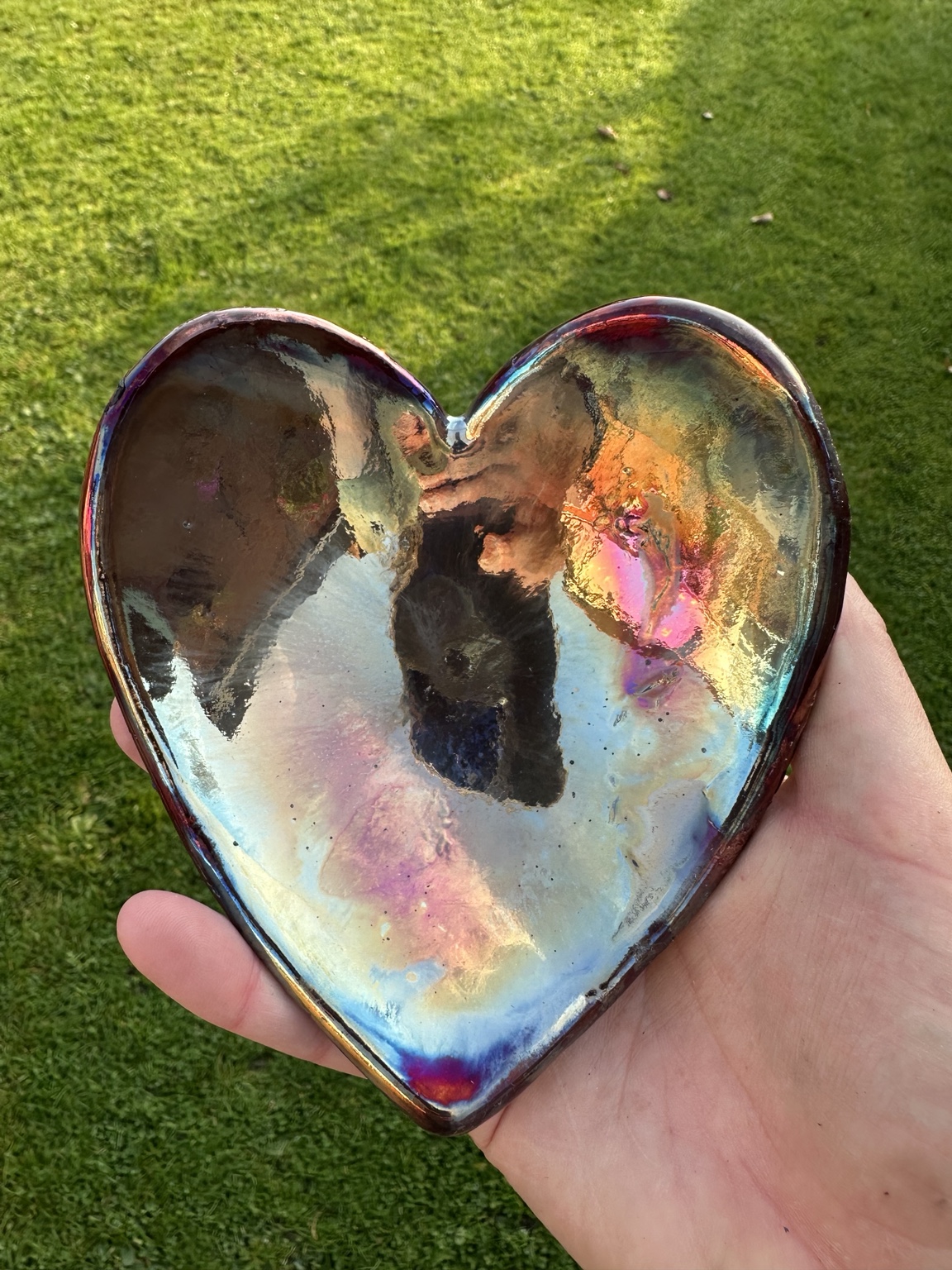
The finished heart, back in the hands that shaped it. I have made the form, mixed and applied the glaze, lifted it from the kiln, placed it into reduction and cleaned it by hand. The fire brings its surprises, but I am part of every stage.